
Humanode Newsletter Vol. 119


Hi everyone,
Welcome to Humanode Newsletter!
Over the past few weeks, we have been working across several connected directions: Vortex, Agentlink, ecosystem visibility, onboarding initiatives, community tools, and new integrations.
A lot of the work this cycle was about making Humanode easier to see, easier to use, and easier to build around. Some of it was public-facing, like the new Humanode Ecosystem Page, Agentlink updates, and the infographic contest. Some of it happened under the hood, especially in Vortex, where we continued cleaning, refactoring, testing, and hardening the simulator.
Here is what happened.
TL;DR
- The new Humanode Ecosystem Page went live, showing real-time information about projects in the Humanode ecosystem.
- A new Humanode concept video went live on YouTube.
- Agentlink was introduced as Proof-of-Human for the agentic web, powered by Humanode Biomapper. Live on Base.
- XONA integrated Agentlink, giving free generations to agents linked to verified humans.
- WURK integrated Agentlink, allowing AI agents linked to verified humans to hire real humans for free on Base.
- Vortex Dev Log 15 covered bug fixes, test infrastructure, veto math, identity handling, concurrency paths, and governance projections. Vortex Dev Log 16 covered the biggest refactor so far, making the simulator cleaner, easier to audit, and easier to keep building.
- How Crypto Was Captured by Wall Street: Victor, Humanode cofounder, tells the story of how he watched crypto get captured from the inside, and why proof of stake was never going to be different from the system it was supposed to replace.
- We published a long-form piece on how crypto’s original revolutionary promise got tamed, and what still needs to be built.
- The Make Humanode Click: Infographic Contest launched.
- Weekly Community Calls continued, with updates on Vortex, patches, onboarding initiatives, ecosystem projects, and tools being prepared for the community.
HUMANODE ECOSYSTEM
Humanode Ecosystem Page Goes Live
The new Humanode Ecosystem Page is now live. You can visit it here: https://ecosystem.humanode.io/
The page gives real-time information about projects currently included in the Humanode ecosystem. At launch, it already showed 34 built projects, with more expected to be added as they go live.
This is a small step in format, but a useful one for the ecosystem. The page is designed as a living map of Humanode’s growing network. As more projects integrate, build, and launch around Humanode, the ecosystem page will become a clearer entry point for users, builders, and community members who want to understand what already exists and what is coming next.
AGENTLINK
Introducing Agentlink: Proof of Human for the Agentic Web
This cycle, we introduced Agentlink. Agentlink is one of the ecosystem projects using Humanode Biomapper. It brings Proof of Human to the agentic web.
AI agents are beginning to interact with wallets, payment systems, APIs, creative tools, marketplaces, work platforms, and social coordination layers. As this grows, services will need a way to know whether an agent is connected to a real, unique human without forcing that human to reveal their identity.
That is where Agentlink comes in. Agentlink allows AI agents to be linked to a verified human through Humanode Biomapper. The service does not need to know who the person is. It only needs to know that the agent is backed by a real, unique human. This creates a useful trust layer for agentic services, especially for free tiers, discounts, grants, rewards, reputation, access control, and anti-abuse systems.
Agentlink Goes Live on Base
Base is becoming an active environment for x402-powered agentic commerce, where agents can call services and pay per request. In that environment, the question of human-backed access becomes practical very quickly.
If services offer free usage, special access, or early benefits, those offers can be farmed by disposable wallets and automated agents. Agentlink gives services a way to check whether an agent is linked to a verified-unique human through Humanode Biomapper.
This makes it possible to design agentic services with cleaner access rules and better protection against fake scale.
XONA Integrates Agentlink
XONA is a creative AI agent on x402 that other agents can call for premium image and video generation, paid per call through x402 micropayments.
Now, agents linked to a verified human through Agentlink, powered by Humanode Biomapper, can receive free generations from XONA.
WURK Integrates Agentlink
WURK.fun is a work layer for agent commerce on x402. It allows AI agents to hire real humans for microtasks such as X raids, replies, comments, polls, and other social engagement campaigns paid in USDC.
With the new Agentlink integration, agents linked to a verified-unique human get one free wurk on Base.
VORTEX
Vortex Dev Log 15: The Great Bug Hunt Restores Trust
The update covered work across several important areas:
- DB-backed server test infrastructure
- Identity handling
- Citizen Veto math
- Concurrency paths
- Governance projections
- Rate limits
- Idempotency
- Era quotas
- Failure handling
A lot of this work was about making the simulator easier to trust again.
Governance tools need clear rules, but they also need consistent behavior underneath those rules. If something fails, that failure should mean something. If a projection changes, the reason should be traceable. If identities appear across different governance surfaces, they should remain consistent.
Dev Log 15 was less flashy than a new feature release, but it was important infrastructure work. It cut through inconsistencies, tightened the test environment, and made Vortex more reliable as a governance simulator.
Vortex Dev Log 16: The Biggest Update So Far
Most of the work is invisible from the outside. The behavior stays the same, but the foundation underneath Vortex is now cleaner.
Over the past month, the team refactored a large part of the simulator so it is easier to read, audit, and keep building. This included smaller files, clearer boundaries, less duplication, and more reusable governance logic across both server and web.
The main goal was to stop logic from piling up in the wrong places. As Vortex grew across proposals, chambers, vetoes, delegation, factions, active-governor status, profiles, feed, and era transitions, the codebase needed cleaner internal structure.
This update makes the simulator easier to maintain and easier to reason about as the system continues to evolve.
Open-source repos:
- Server:https://github.com/humanode-network/vortex-simulator-server
- Web:https://github.com/humanode-network/vortex-simulator-web
COMMUNITY
Weekly Community Calls Continue
Throughout this cycle, we continued holding weekly Humanode Community Calls.
The calls covered Vortex operations, bug fixes, upcoming patches, new projects in the works, onboarding initiatives, ecosystem projects, and tools being prepared for the community.
Some updates are shared directly on the calls before they appear anywhere else. Everyone can join, listen, ask questions, or hop on stage and speak directly with the founders. Text questions are also welcome for anyone who is shy, busy, or not in a voice-friendly environment.
The calls remain one of the best places to follow the fuller picture of what is being built.
Make Humanode Click: Infographic Contest
Infographic Contest launched on May 15. The challenge is simple: pick one Humanode concept and explain it visually.
Participants can choose Biomapper, BotBasher, Vortex governance, biometrics, PoBU, CVMs, Sybil resistance, or another part of the Humanode ecosystem.
There is one rule: no “one human = one node = one vote” infographics this time. We want the community to go deeper and explain one specific part of Humanode clearly. AI tools are allowed. Sloppy AI work is not.
Prizes:
- 3 winners: $50 each, decided through Sybil-resistant voting
- 3 special mentions: $10 each, picked by the Humanode team
- 1 exceptional entry: $50 founders’ prize
To participate, post your infographic on X, YouTube, TikTok, Facebook, or Instagram. Tag @humanode_io or use $HMND. Then drop the link in #humanodes-got-talent in the Humanode Discord.
The contest started on Friday, May 15, 2026.Deadline: Friday, May 29, 2026.
Pick one thing cool about Humanode. Explain it well. Make people get it.

MEDIA AND WRITING
New Humanode Concept Video
A new Humanode concept video went live on YouTube. The video gives a look at the vision we have been exploring and how it fits into the bigger direction of Humanode.
Watch it here:
How a Revolution Got Tamed, and What We Have to Build Next
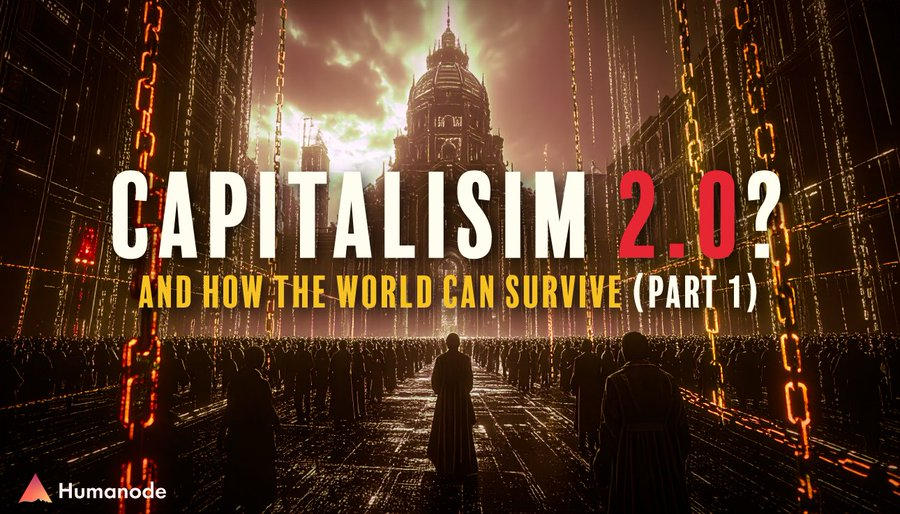
We also published a long-form piece on crypto history, decentralization, and the layer the industry still has not built. The article begins with two moments in crypto history:
2009: Satoshi embeds a newspaper headline about bank bailouts into Bitcoin’s first block. A protest in code.
2025: a prominent founder describes crypto’s real endgame as “Capitalism 2.0.”
The piece asks how crypto moved from one moment to the other, and what still needs to be built if decentralization is going to remain politically meaningful.
For Humanode, the question is practical. Decentralized systems need infrastructure that can resist capture, fake participation, bot-driven influence, and capital-weighted control. Sybil resistance, Biomapper, BotBasher, Vortex, PoBU, and human-centered governance all belong to that larger problem.
That’s it for today! More updates are already in motion.
See you in the next Community Call.
— The Humanode Team
For more information, visit:
▲ Website
▲ GitHub
▲ Discord